
E-Commerce SEO Strategies in Kenya That Boost Sales Instantly
In today’s competitive online retail landscape, effective SEO is crucial. E-commerce businesses must combine technical optimisation, targeted keyword research, persuasive content marketing, link building, and conversion rate improvements to increase traffic and organic search results .
Key Takeaways: Master E-Commerce SEO Strategies to Increase Sales
To boost sales through SEO, e-commerce brands must go beyond keywords and rankings. This guide breaks down a full-stack strategy:
- ð§ Technical SEO: Improve site speed, mobile-friendliness, and structured data to enhance performance and search visibility.
- ð Keyword Research: Focus on long-tail and commercial intent keywords using tools like SEMrush and Ahrefs to attract ready-to-buy traffic.
- ð️ On-Page Optimisation: Craft compelling product titles, unique descriptions, and SEO-friendly category structures to improve rankings and conversions.
- ð Content Marketing: Create blogs, buyer guides, and videos that educate, engage, and drive customers down the sales funnel.
- ð Link Building: Build high-quality backlinks through guest posts and partnerships to grow domain authority.
- ð¯ Conversion Rate Optimisation (CRO): A/B test CTAs, streamline checkouts, and improve UX to turn traffic into paying customers.
- ð SEO Audits: Regularly check site health, keyword gaps, and backlink profiles to stay ahead of competitors.
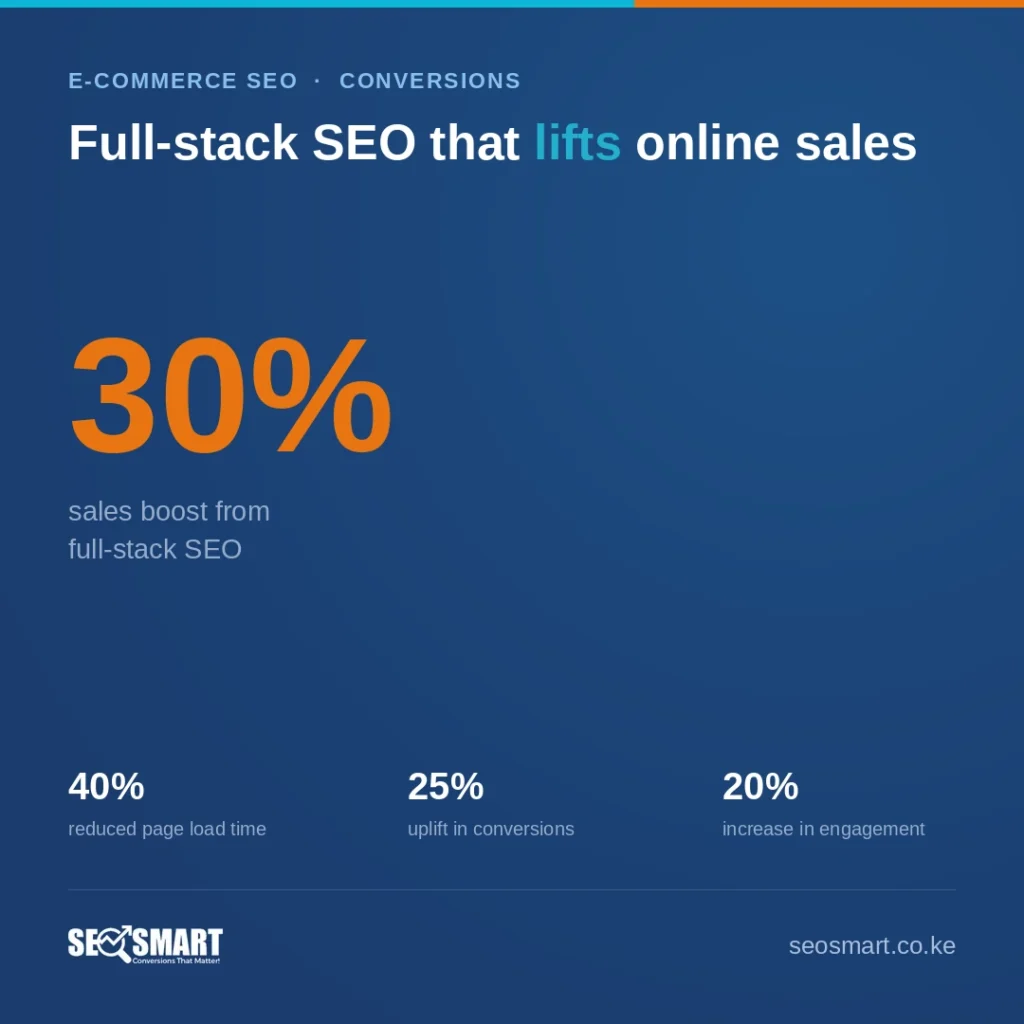
- ð Real Results: Case studies show sales boosts of up to 30% using these tactics.
ð SEO for e-commerce isn’t a one-off task—it’s a continuous cycle of optimising for visibility, engagement, and conversions.
What Are the Most Effective E-Commerce SEO Strategies for Instant Sales Boost?
Effective e-commerce SEO enhances organic traffic and converts visits into sales. By focusing on technical optimisation, engaging content, and strong backlink profiles, businesses can improve search rankings and user experience engagement while ensuring fast page speed, mobile responsiveness, and secure connections.
How Does Technical SEO Improve E-Commerce Site Performance?
Technical SEO ensures fast load times, mobile-friendliness, and proper use of structured data. Optimised images, minified CSS/JavaScript, and responsive design reduce load times, resulting in improved user experience satisfaction and higher conversion rates.
Why Is Keyword Research Critical for E-Commerce SEO Success?
Keyword research helps target search terms with clear commercial intent. By aligning product descriptions and meta tags with customer queries, businesses attract targeted traffic. Tools like SEMrush and Ahrefs assist in discovering keywords that drive organic search results .
How Does on-Page Optimisation Increase Product Page Rankings?
On-page optimisation involves clear product titles, engaging descriptions, optimised images, and natural use of long-tail keywords. This approach increases organic visibility and reduces bounce rates while enhancing customer experience.
What Role Does Content Marketing Play in Driving E-Commerce Sales?
Content marketing builds trust and drives conversions. SEO-optimised blog posts, buyer guides, and product descriptions not only inform customers but also boost brand authority. Video tutorials, infographics, and testimonials further enhance credibility and guide prospects through the buying process, improving search engine optimisation in the market.
How Can Link Building Enhance Domain Authority and Sales?
Link building improves domain authority and search rankings by earning quality backlinks. Techniques such as guest posting and influencer collaborations signal trustworthiness to search engines, leading to increased traffic and keyword research .
Why Is Conversion Rate Optimisation (CRO) Essential for E-Commerce Growth?
CRO improves user experience and increases sales conversions by refining calls-to-action, streamlining checkout processes, and employing A/B testing. Even small keyword research improvements can significantly reduce cart abandonment and boost revenue.
How to Perform a Comprehensive E-Commerce SEO Audit for Immediate Improvements?

A comprehensive SEO audit identifies technical and on-page issues affecting performance. Regular audits help address problems related to site speed, mobile design, indexation, and link quality, ensuring continuous improvement and high search engine optimisation rankings.
What Technical SEO Elements Should You Check in an Audit?
Key elements include page load speeds, mobile responsiveness, SSL certification, URL structure, and accurate site map. Tools like Google PageSpeed Insights can reveal elements that slow down the site.
How to Identify and Fix on-Page SEO Issues During an Audit?
Audits should identify duplicate content, missing meta tags, and poorly structured headers. Tools such as Screaming Frog and SEMrush help reveal these issues so they can be fixed by rewriting content, updating title tags, and optimising images through search engine optimisation.
Which Tools Help Conduct an Effective E-Commerce SEO Audit?
Essential tools include Google Analytics, Google Search Console, SEMrush, Ahrefs, and Screaming Frog to detect errors, track keyword performance, and analyse traffic patterns.
How Does Structured Data Implementation Impact SEO Audits?
Structured data, like schema markup, clarifies page content for search engines and can improve click-through rates by displaying rich snippets with ratings and prices.
How to Conduct Keyword Research That Targets High-Converting E-Commerce Terms?
Target high-converting keywords by analysing search volume, competition, and buyer intent. Focusing on long-tail keywords with commercial intent improves the chance of converting traffic into sales.
What Are the Best Keyword Research Tools for E-Commerce SEO?
Tools such as Google Keyword Planner, SEMrush, Ahrefs, and Moz Keyword Explorer provide insights into search volumes, trends, and competitive landscapes, helping refine keyword strategies.
How to Find and Use Long-Tail Keywords for Better Sales?
Long-tail keywords, which are longer and more specific, attract highly targeted traffic. Incorporating these in search engine optimisation descriptions and FAQs addresses specific customer needs effectively.
How to Analyse Competitor Keywords to Gain an Advantage?
Competitor analysis with tools like Ahrefs and SEMrush reveals untapped keyword opportunities and helps refine bidding strategies on high-intent phrases.
What Are Commercial Intent Keywords and Why Do They Matter?
Commercial intent keywords (e.g., “buy,” “discount”) indicate readiness to purchase and correlate with higher conversion rates. Integrating these into keyword research pages and CTAs enhances engagement and sales.
How to Optimise Product and Category Pages for Maximum SEO Impact?

Optimise product and category pages by using clear descriptions, high-quality images, and easy navigation. Schema markup and mobile-friendly designs are essential for users on smart devices. Search engine optimisation is crucial for improving online visibility.
What Are the Best Practices for Product Page SEO?
unique descriptions, optimised title tags, high-quality images, and internal linking. These actions provide
help search engines index the page
How to Structure Category Pages to Improve Search Rankings?
Category pages should offer clear navigation with headers, subcategory lists, and effective CTAs. Internal links and targeted content improve authority and ranking.
How to Use Schema Markup on Product and Category Pages?
Adding schema markup provides rich snippets with prices, availability, and reviews, improving both visibility and click-through rates.
How Does Mobile Optimisation Affect Product and Category SEO?
Optimising for mobile using responsive design and AMP ensures fast load times and intuitive navigation, which is crucial for ranking in today’s mobile-first environment.
What Content Marketing Strategies Drive Traffic and Sales for E-Commerce?
Content marketing builds trust and drives conversions through blog posts, videos, and buyer’s guides that address customer needs and encourage repeat purchases.
How to Create SEO-Optimised Blog Posts That Convert?
Blog posts should include actionable content, relevant long-tail keywords, and data-driven insights. Formats like case studies and how-to guides help convert readers into customers.
What Are Effective Product Description Techniques for SEO?
Effective descriptions highlight unique selling propositions, specifications, and benefits. Including testimonials and clear CTAs builds trust and improves conversions.
How Can Video Marketing and Infographics Boost E-Commerce SEO?
Videos and infographics offer visual storytelling that increases engagement and dwell time. They simplify complex information and are easily shareable, indirectly boosting SEO.
How to Develop Buyer’s Guides That Improve User Engagement?
Buyer’s guides offer detailed product overviews, comparisons, and expert advice. Optimised with relevant keywords and visuals, they drive traffic and establish authority.
How to Build High-Quality Backlinks That Increase E-Commerce Authority?

High-quality backlinks strengthen domain authority and boost rankings. Invest in sustainable link profiles through guest posts, digital PR, and influencer collaborations.
What Are Proven Link Building Techniques for E-Commerce Sites?
Effective link building includes guest blogging, influencer collaborations, and creating shareable content that naturally attracts links.
How to Identify and Target Relevant Resource Pages for Links?
Use SEO tools to find authoritative resource pages in your niche and target them to secure quality backlinks.
How to Analyse and Monitor Your Backlink Profile Effectively?
Regularly monitor backlink profiles with tools like Ahrefs and SEMrush to ensure quality and remove any harmful links.
How to Use Conversion Rate Optimisation (CRO) to Turn Traffic Into Sales?
CRO refines the user experience to boost sales by testing design elements, enhancing CTAs, and simplifying the checkout process through A/B testing.
What Are the Best a/B Testing Practices for E-Commerce Websites?
Develop clear hypotheses, test one variable at a time, and monitor results over time. A/B testing can reveal improvements that boost conversions by 15–20%.
How to Optimise Calls-to-Action (CTAs) for Higher Conversions?
Strong CTAs use clear, action-oriented language placed prominently to drive immediate action and can improve conversions significantly.
How to Improve Checkout Process to Reduce Cart Abandonment?
Streamline checkout by reducing form fields, offering guest checkout, and displaying progress indicators. Secure payment options build trust and reduce cart abandonment.
How Does User Experience (UX) Impact Conversion Rates?
A seamless UX with intuitive design and fast-loading pages reduces bounce rates and increases customer retention, resulting in higher conversions.
What Are Real-World Case Studies Showing Instant Sales Boosts From SEO?

Case studies illustrate how e-commerce companies have increased sales through SEO. These examples show improvements in rankings, traffic, and conversion rates.
How Did eCommBoost Increase Sales for an E-Commerce Client?
By focusing on technical optimisation, on-page enhancements, and targeted backlink campaigns, one client saw a marked sales increase over six months through systematic A/B testing and ongoing search engine optimisation adjustments.
What Product Page Optimisations Led to Higher Rankings and Conversions?
product descriptions, proper schema markup, and high-quality images resulted in better rankings and easier access to product details, boosting conversion
How Can You Apply These Case Study Lessons to Your Store?
Businesses can replicate these results by performing regular SEO audits, investing in thorough keyword research, and consistently monitoring key performance metrics.
What Are Common FAQs About E-Commerce SEO Strategies That Boost Sales?
| Strategy | Key Benefit | Typical Effect | Metric Impact |
|---|---|---|---|
| Technical SEO | Faster load times | Faster page loads | Lower bounce rate |
| Keyword Research & On-Page S.E.O. | Targeted traffic | More relevant visitors | Higher conversion rate |
| Link Building | Improved domain authority | Stronger authority signals | Greater organic reach |
| Conversion Rate Optimisation (CRO) | Smoother user experience | Fewer abandoned journeys | Reduced cart abandonment |
How to Use Conversion Rate Optimisation (CRO) to Turn Traffic Into Sales?

By employing CRO tactics like streamlined landing pages and optimised CTAs, online retailers can convert increased traffic into consistent sales through continuous testing and user experience improvements.
Frequently Asked Questions
Q: What is E-commerce SEO and why is it essential? A: It uses technical, on-page, and off-page strategies to improve visibility, drive targeted traffic, and boost conversion rates through search engine optimisation.
Q: How long does it take to see results? A: Improvements in traffic and sales are typically observed within 3 to 6 months.
Q: Which SEO tactic has the highest impact on conversions? A: Conversion rate optimisation (CRO) directly enhances user experience and checkout processes.
Q: Can small e-commerce businesses benefit? A: Yes, a data-driven SEO approach benefits businesses of all sizes.
Q: What cost range is associated with these strategies? A: SEO investments vary widely; many scalable strategies offer high returns with cost-effective tools.
Final Thoughts
A holistic approach to e-commerce SEO—integrating technical optimisation, targeted keywords, compelling content, strong backlink profiles, and effective CRO—can significantly boost sales and user experience . Continuous optimisation and monitoring ensure that these strategies remain effective in a competitive digital marketplace.

Mehul Shah is the Founder and Managing Director of SEO Smart Limited, a specialised SEO, GEO and AEO agency based in Kenya. With nearly 20 years of experience, Mehul helps agencies and businesses build scalable SEO strategies, performance-optimised websites, and conversion-driven content marketing frameworks.